-
Can a Citizens’ Assembly be decolonised?
The attempts to include “the other” in political deliberation frequently overlook Indigenous peoples’ territorial and epistemic dispossession. Eve Tuck and Wayne K. Yang challenge the frequent linking of decolonisation with social justice, arguing that academia’s fascination with decolonisation ultimately preserves settler futurity and does little to advance concrete struggles over Indigenous land claims. Promises to…
-
Floraissance art as deliberation
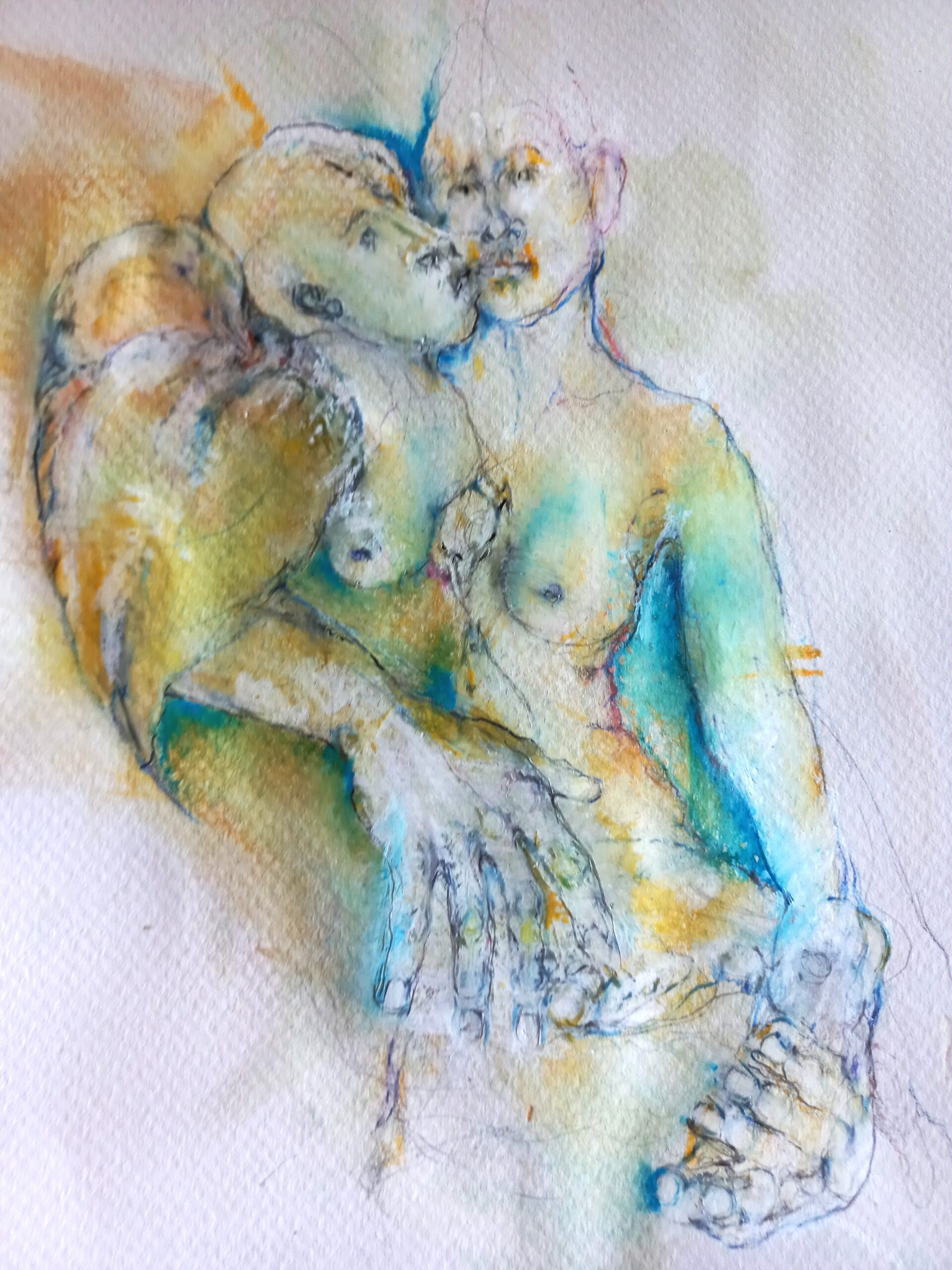
Can art make us better humans? What is contentment? What is enough? Making 35 000 euros a year makes you part of the 3,5% richest people in the world. Such a position comes with a larger responsibility regarding the devastation caused to our planet. Can we learn the art of giving up, and how? We…
-
Deliberation is necessary
Although there appears to be clarity about what states must do to reduce emissions while protecting human well-being, action is lacking. The UN Emissions Gap Report 2024 highlights a disparity between rhetoric and reality. Governments are far from agreeing on the measures needed to avoid the most severe forecasted impacts. Rather than heeding scientific guidance,…
-
Post-growth Futures
As delegates at the EU Parliament’s 2023 Beyond Growth conference were told, addressing climate change and biodiversity loss requires confronting the foundations of the mainstream economic model. Countries continue to treat rising global output (GDP) as a universal remedy. Yet this aggregate, developed a century ago, cannot capture harm to nature — GDP can increase…
-
The Planetary Crisis – we have exceeded the 1.5°C limit
In May 2023, about 7,000 people met at Beyond Growth conference in the EU Parliament to explore pathways toward a post-growth society. That year was recorded as the hottest since the 1850–1900 pre-industrial baseline used for global temperature targets. The record was exceeded the next year 2024, when, according to the Copernicus Climate Change Service,…
-
Building Trust in Many Worlds

The Climate-Ecology Blueprint envisages that a strategy for life within planetary boundaries requires reforming democracies by involving in the decision making processes a Citizens’ Assembly, or multiple assemblies, where people gather to deliberate with each other and build trust. Trust is a crucial component that needs to be enhanced through policy and action. In a…
-
Vidas Ativas

From South America, Ana Gretel Echazú Böschemeier shares her encounters with Asian researchers and educators Amporn Marddent, Monira Ashan, and the Venerable Dhammananda. From their diverse backgrounds as academics, teachers, migrants, and activists engaged in culture and spirituality, they bring a range of issues that highlight the inherent relationship between knowledge production and a caring…
-
The Bitter Sweet Truth: the arduous path from the cocoa bean to chocolate

The Climate-Ecology Blueprint challenges the current economic paradigm of GDP measures of growth and consumerism, which promotes supply chains with unsustainable extractivism, pollution and waste. It provides a set of criteria that guards against climate and ecological injustice and greenwashing. It also has a measurable target to increase the health, abundance, diversity and resilience of…
-
Voices of Latin America: Latin America at a breaking point

Latin America Bureau’s (LAB) has been bringing the voices of Latin American activists to English speaking audiences. Listen to the presentation by the author of “The Heart of our Earth” Tom Gatehouse about the concerns raised by the activists LAB has worked with. Latin America remains one of the most dangerous regions for environmental activists.…
-
Resources for Citizens’ Assemblies

The Knowledge Network on Climate Assemblies (KNOCA) aims to improve the commissioning, design, implementation and impact of climate assemblies, using evidence, knowledge exchange and dialogue. KNOCA – Knowledge Network On Climate Assemblies Could Citizens’ Assemblies be Democracy’s Missing Link? An article by David Van Reybrouck, who has taken part in designing the Ostbelgien Model in…